
Search Lafayette County Public Records
Lafayette County Public Records have a long land history, and that makes the county a good place to start when you need a deed trail or a certificate copy. The Register of Deeds handles the core record work, and the county clerk handles county government and election records. For land searches, the county offers both electronic access and paper copy options, so you can choose the path that fits your request. If you need an older record, Lafayette County is especially useful because its land and vital records go back to the county's formation period.
Lafayette County Overview
Lafayette County Public Records Sources
The Lafayette County Register of Deeds is at 626 Main Street in Darlington, with mail service through PO Box 170. The phone number is (608) 776-4838 and the fax number is (608) 776-4991. The county research says land records are available back to 1847, marriage certificates back to 1847, and birth and death certificates back to 1870. That makes the register office the obvious first stop when you need a deep local record trail. The official county homepage at lafayettecountywi.org is the safest county gateway in the research set.
This Lafayette County Public Records image comes from the county homepage at lafayettecountywi.org.
The county homepage is the best local starting point because it points to the records office and the county clerk without forcing a third-party search.
Online access is split between Tapestry for occasional users and Laredo for local daily users. That is a practical setup because it lets the county serve both one-time searchers and people who work records every week. If you need a paper copy, the county also offers paper copies for the general public, and the research notes that they are mailed the same day when payment is received upfront.
This Lafayette County Public Records image comes from the Register of Deeds page at lafayettecountywi.org/deeds.
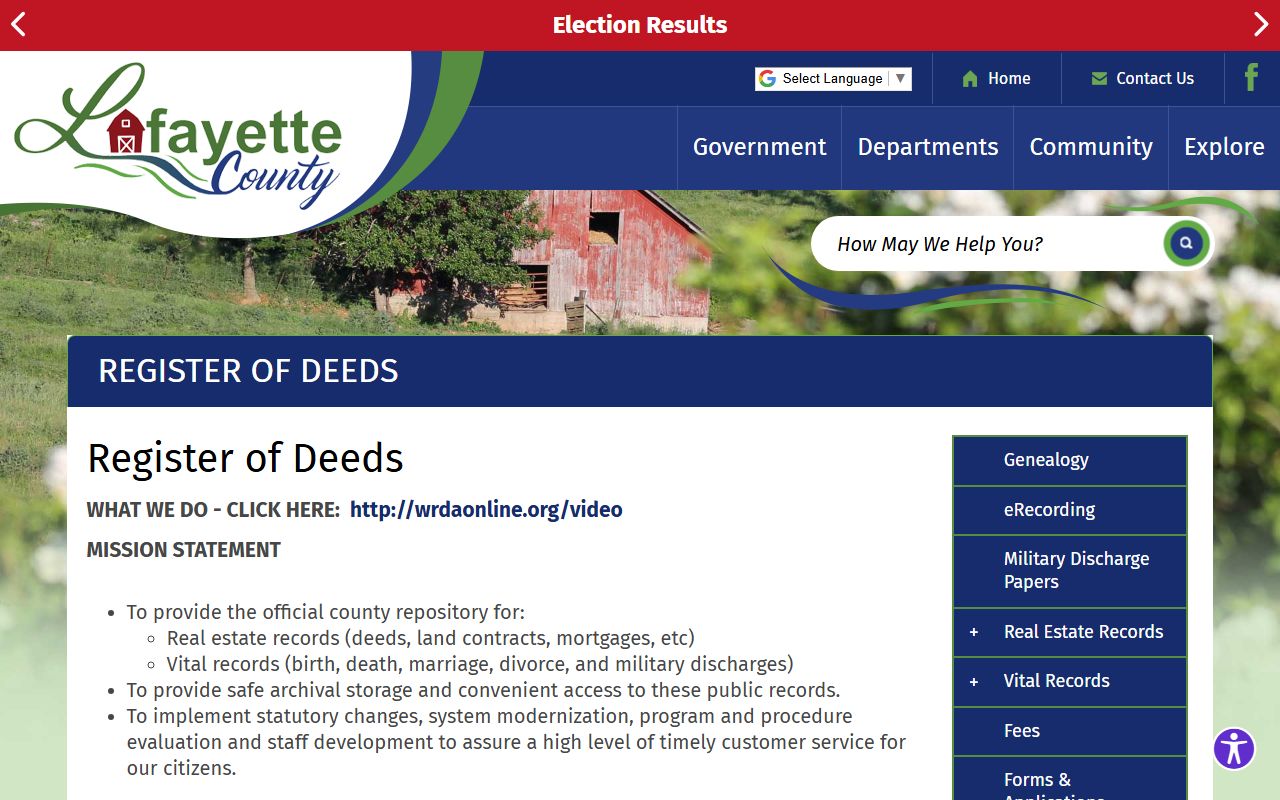
That office is the local record hub for land files, certificates, and document preparation.
The County Clerk is at 626 Main Street in Darlington as well, with phone 608-776-4850 and fax 608-776-8893. That office handles marriage licenses, voter and election information, and county government records. It is a helpful second stop when the request is not land-based. Lafayette County Public Records searches are easier when you keep that office split in mind and send the question to the right desk the first time.
Lafayette County Public Records Search
The land search options are built for different kinds of users. Tapestry works for occasional professional users, while Laredo is better for local daily users. If you only need a paper copy, the county still supports that path, and the public copy process is simple once the office has the request in hand. The register office also posts a real estate recording checklist, which is useful when you want to send the right paper the first time. That checklist can save a trip if you are recording a deed or another land document.
Lafayette County Public Records also cover older certificates. The county keeps marriage records back to 1847 and birth and death records back to 1870. That means the office can help with a wide range of family research, not just land work. For older property searches, the land history is strong enough that you can often trace a parcel back into the county's early years without leaving the local system. The county makes that easier by keeping the land and vital record work in one office.
For a court check, the county research in this batch does not surface a direct clerk of courts URL, so Wisconsin Circuit Court Access at wcca.wicourts.gov is the right public index. The Wisconsin Court System at wicourts.gov and the DOJ Office of Open Government at doj.state.wi.us/office-open-government give the broader access rules if you need them. That keeps the search local at first and statewide only when it has to be.
The state backup is useful because Lafayette County keeps both a local records path and a broader legal frame. You can use the county office for the copy and the state tools for the rules. That combination helps if you need to explain why a record should be available or why the county sent you to a different office for the final file.
- Use Tapestry if you search only now and then.
- Use Laredo if you work Lafayette County records often.
- Use the paper copy path when you want a mailed record.
- Use WCCA for circuit court case checks.
Lafayette County Office Notes
The county clerk is at the same Main Street address in Darlington and handles marriage licenses, voter and election information, and county government records. That makes the clerk a useful side office for records work, even when the main request stays with the Register of Deeds. If your search starts with a county government paper instead of a land document, the clerk is the place to ask first. The office gives Lafayette County a simple government-record lane that fits well beside the land lane.
The county's land checklist and office structure make the request process easy to follow. If you are mailing a paper in, you can line up the format before you send it. If you need a historical record, the date range tells you whether the county office should have it. That is what makes Lafayette County Public Records useful: the office still carries the early record trail, but it also has modern online access for current searches.
Lafayette County also benefits from having one courthouse-centered layout for several record tasks. A deed request, a certificate request, and a county government request do not all go to the same desk, but they do stay within a compact local system. That is helpful when you are building a longer record search and need to move from land history into county administration without starting over. In a smaller county, that kind of office clarity matters because the fastest record search is often the one that gets routed correctly on the first call.
For state fallback, the Wisconsin Vital Records Office at dhs.wisconsin.gov/vitalrecords is the right choice when a certificate has moved into the statewide system. That keeps the request from wandering. If the county has the file, stay local. If the state has it, move to the state path. That is the simplest way to work Lafayette County Public Records.
Lafayette County Fee Guide
The research says recording fees are available on the county website fee schedule, but it does not give one flat public number in the notes here. That is normal for counties that update their fee pages separately. The safest move is to check the fee schedule before you mail payment. For paper copies, the county says the general public copy path is available and that requests are mailed the same day once payment is received upfront. That helps keep the process moving.
Because Lafayette County has both online and paper access, the fee question depends on how you search. A one-time search through Tapestry may be a different cost than a regular user plan in Laredo, and a mailed copy can be priced differently from an online document pull. The county also has a real estate recording checklist, which is a good clue that it expects people to bring the right document format to the office the first time.
For certificate work, the state vital records office can help if the county record has moved on. That is why Lafayette County Public Records searches are easiest when you match the date and office before you send the request. It keeps the search clean, the fee predictable, and the result in the right box.
If you are comparing several land documents, it often helps to use the online search first, then order only the pages that matter. That approach keeps costs down and helps you avoid paying for records that do not answer the question you started with. Lafayette County's mix of online access, mailed copies, and in-office help makes that kind of staged search practical. It is a better fit than treating every request like a full copy order from the start.
The same county fee page also helps you compare a search request with a certified copy request. That matters because record work can be simple when you only need an index look, but it can take a different route when you need a certified paper file. A small amount of planning keeps Lafayette County Public Records work efficient.