
Search Sheboygan Public Records
Sheboygan Public Records are managed through the city clerk and the police department open records process, so the first step is knowing what kind of city file you need. The city clerk keeps legislation, Common Council meeting records, transcripts, orders, certificates, petitions, and the municipal code. The police department handles open records requests for incident material and related report work. If you know whether your search is about a council record, a police report, or a city ordinance file, you can go straight to the right office and keep the search focused from the beginning.
Sheboygan Public Records Office
The city clerk office is the main starting point for Sheboygan Public Records tied to city legislation and council business. The office is at City Hall, 828 Center Avenue, Sheboygan, WI 53081, with phone 920-459-3361. The hours are Monday through Thursday from 7:30 am to 4:30 pm and Friday from 7:30 am to 11 am. That gives the public a direct city office for records that are not police related.
This Sheboygan Public Records image comes from the City Clerk page at sheboyganwi.gov/179/City-Clerk.
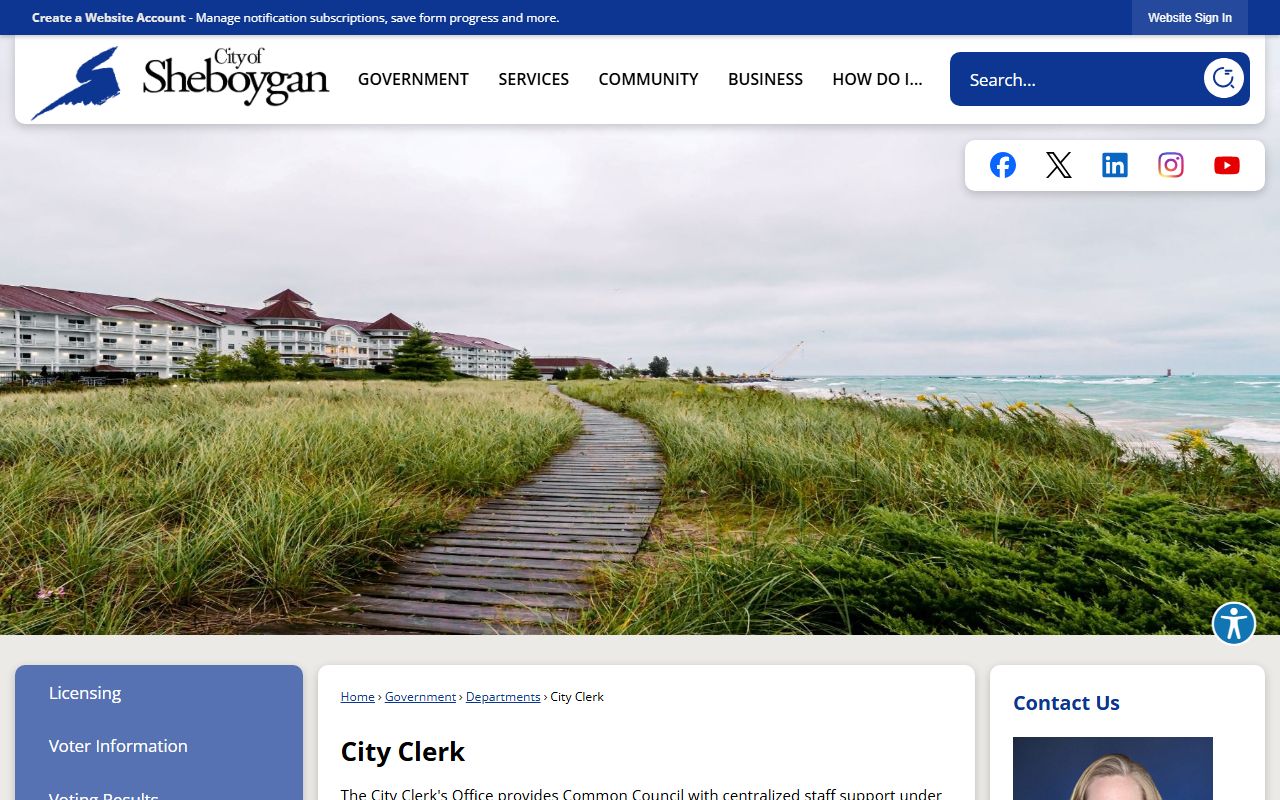
The clerk page works well as the city anchor because it shows where legislation and meeting records are kept and copied.
The clerk's office maintains custody, control, filing, and storage of city legislation. It also records Common Council meetings, keeps transcriptions bound and maintained, furnishes copies of transcripts and other city documents, accepts citizen petitions, and publishes the municipal code of ordinances. That means the office is not just an information desk. It is the city record holder for a large part of Sheboygan's public file trail.
Sheboygan Public Records Search
A Sheboygan Public Records search works best when you match the record to the office that keeps it. City legislation and council records belong with the city clerk. Police reports and incident material belong with the police open records process. If you are trying to find a transcript, an order, a petition, or a municipal code reference, the clerk office is the better starting point. That keeps the search from turning into a citywide guess.
The city clerk office is especially useful because it stores and furnishes copies of many city documents. If the record is a council action or a city legal document, the clerk can help you identify what exists and where it belongs. That is valuable in a city where official records are tied closely to legislation, meetings, and ordinances. The office acts like the city memory for those files.
To keep a Sheboygan Public Records request clean, bring the details that the city can use right away.
- Meeting date, ordinance number, or petition topic if it is a clerk record
- Report date, subject name, or incident clue if it is a police record
- Any transcript title, order number, or city document reference
- What format you want, such as paper copy or electronic file
- The department you think has the record if you already know it
That list helps because Sheboygan's city records are spread across a few clear functions. Once you know the record type, the office can move faster. That is better than asking the city to guess what you want from a broad request with no date or document clue.
Sheboygan Public Records from Police
The police department open records process handles the city side of Sheboygan Public Records that involve reports. The department phone is 920-459-3337, and in-person requests are handled Monday through Friday from 7:30 am to 5:30 pm. The processing time is generally 7 to 10 working days, which is useful to know if you are planning around a court date or another deadline. It also tells you that police records are handled carefully and not as an instant online release.
The fee schedule is also specific. Black photocopies are $0.05 per page, color copies are $0.09 per page, CDs are $0.20, DVDs are $0.25, squad DVDs are $0.30, double layer DVDs are $1.00, Blu Ray discs are $1.00, and double layer Blu Ray discs are $2.75. Prepayment is required for costs over $5.00, and locating costs over $50.00 are charged to the requester. That gives you a clear financial picture before you submit the request.
Sheboygan also lists juvenile record restrictions, which is important because not every record is released the same way. The city limits release to a parent or legal custodian, a guardian named by court with documentation, a legal custodian given by court order, a juvenile age 14 or older requesting their own record, a victim of the juvenile's act, or an insurance company with a signed release. That is a local rule set, and it helps explain why some records take more care than others.
Sheboygan Public Records Access Tips
The best way to work Sheboygan Public Records is to decide whether the record belongs to the clerk or the police department. If it is legislation, a meeting record, a petition, or a municipal code item, start with the city clerk. If it is an incident report or other police material, start with the police open records process. That separation keeps the request from being sent to the wrong desk and makes the city answer easier to follow.
Sheboygan also shows why city records work is better when the office and the fee path are clear. The clerk hours tell you when the office is open. The police office tells you what to expect for processing time and copy costs. If a request may have redaction or locating costs, the city gives you the key price thresholds ahead of time. That is a practical public records system because it lets you prepare before you ask.
If you want a broader legal frame behind the city process, Wisconsin Public Records Law in chapter 19 at docs.legis.wisconsin.gov/statutes/statutes/19 explains the access rule the city works within. That is useful when a record needs partial release, a redaction review, or a clear explanation of why the city can release one file and withhold another.